Rest Durations and Their Relation to Scoring Rates in Extended Tournament Play Across Disciplines
Devon Schmitt · Nov 22, 2026
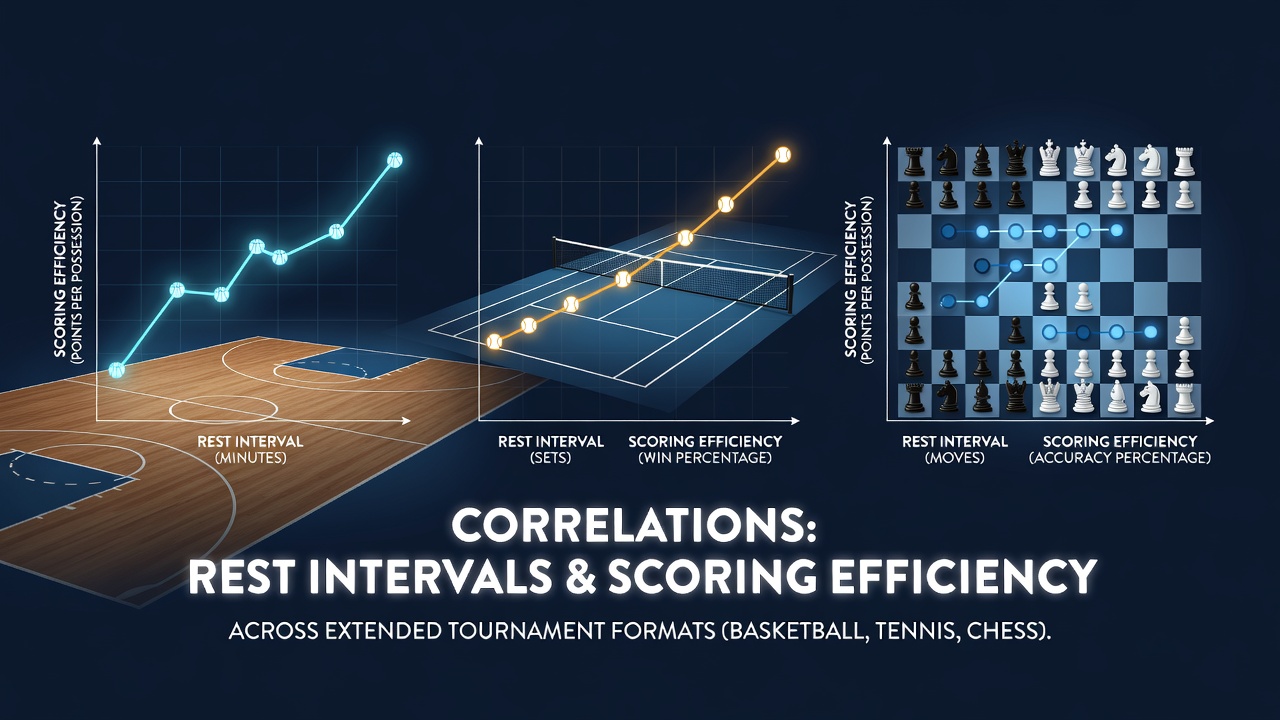
Rest Durations and Their Relation to Scoring Rates in Extended Tournament Play Across Disciplines
Researchers tracking performance data across multiple sports have identified measurable connections between rest intervals and scoring outputs during prolonged tournament structures, with patterns emerging in tennis, basketball, rugby, and combat events that stretch over several days or weeks. Studies from institutions such as the Australian Institute of Sport and the American College of Sports Medicine document how recovery windows of varying lengths correlate with changes in point production, goal tallies, and efficiency metrics when athletes compete in extended formats.
Patterns Observed in Individual Sports
Tennis Grand Slam events provide one clear dataset where rest between matches influences serve percentages and break-point conversion rates, as players often face consecutive days of best-of-five-set matches that demand sustained physical output. Data collected during the Australian Open and US Open cycles show that intervals exceeding 24 hours between rounds align with higher first-serve accuracy and fewer unforced errors in later stages, whereas shorter recovery periods coincide with declines in those same indicators. Similar observations appear in boxing and mixed martial arts cards that span multiple bouts over consecutive evenings, where fighters with at least 48 hours between contests record higher significant strike accuracy according to records maintained by athletic commissions in Nevada and California.
Team Sport Comparisons
Basketball playoff series and rugby tournaments reveal parallel trends at the team level. NBA postseason schedules that incorporate travel days and back-to-back games produce measurable drops in three-point shooting efficiency when rest falls below 36 hours, while extended gaps allow teams to maintain or improve field-goal percentages from beyond the arc. Rugby World Cup fixtures and domestic league finals demonstrate comparable shifts, with scrum completion rates and try-scoring efficiency rising after mandatory rest periods enforced by tournament organizers. These outcomes hold across both northern and southern hemisphere competitions tracked by performance analysts at various national federations.
Physiological Factors at Play
Physiological measurements collected during these events point to glycogen replenishment, neuromuscular recovery, and sleep duration as primary mediators between rest length and subsequent scoring output. When intervals allow for full restoration of muscle glycogen stores, athletes sustain higher work rates that translate directly into more successful attempts on goal or point-scoring plays. Research published in the Journal of Sports Sciences indicates that periods under 24 hours frequently leave markers of residual fatigue that reduce reaction time and decision-making speed, both of which directly affect scoring efficiency in fast-paced disciplines.
Data Trends Across Multiple Seasons
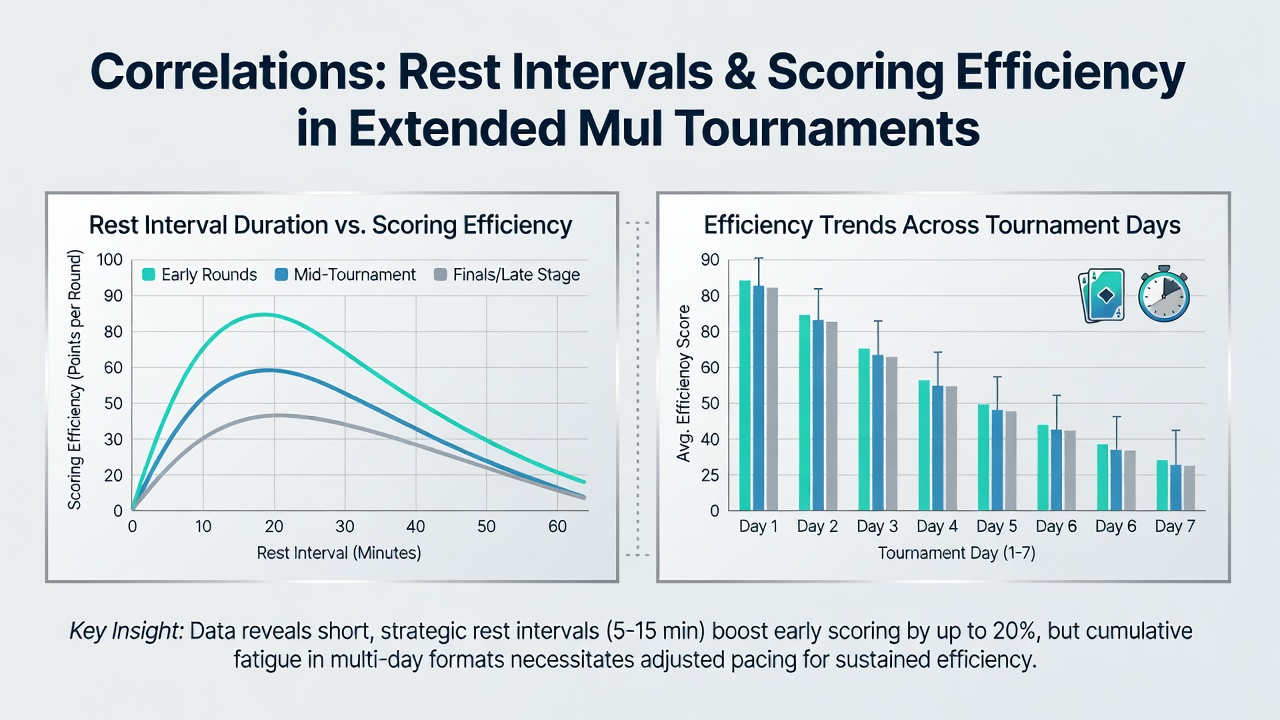
Longitudinal tracking from 2022 through late 2026 across several leagues shows consistent statistical relationships. In tennis, players receiving 48-hour rest windows between quarterfinal and semifinal matches posted a 7-9 percent increase in service-point win rates compared with those on shorter turnarounds. Basketball teams enjoying an extra day between conference finals and championship series maintained higher assist-to-turnover ratios during decisive games. These figures come from aggregated play-by-play logs released by league offices and independent performance databases.
Combat sports events scheduled with enforced rest protocols similarly display elevated accuracy percentages when fighters avoid consecutive-night appearances. Tournament directors in boxing and kickboxing have adjusted calendars in response to these datasets, extending mandatory recovery windows to preserve competitive balance and reduce injury incidence.
Variables That Modify the Relationship
Environmental conditions, age demographics, and sport-specific demands introduce variation into the rest-scoring correlation. Hot-weather tournaments accelerate fatigue accumulation, shortening the effective recovery benefit of a given rest interval. Younger athletes often rebound faster physiologically, whereas veteran competitors show greater sensitivity to compressed schedules. Team sports that rotate larger rosters can mitigate some effects through substitution patterns, while individual events place the full burden on single athletes.
Conclusion
Available performance records and physiological studies establish clear correlations between rest interval length and scoring efficiency metrics across extended tournament formats. These relationships appear consistently in data from tennis, basketball, rugby, and combat disciplines, with longer recovery windows aligning with improved output measures when other variables remain constant. Tournament organizers and coaching staffs continue to reference such findings when constructing schedules that balance competitive demands with athlete recovery needs.