Momentum Shifts Reshaping Real-Time Wagers in Overtime Basketball, Rugby Pack Battles, and Darts Finishing Sequences
Devon Schmitt · Nov 8, 2026
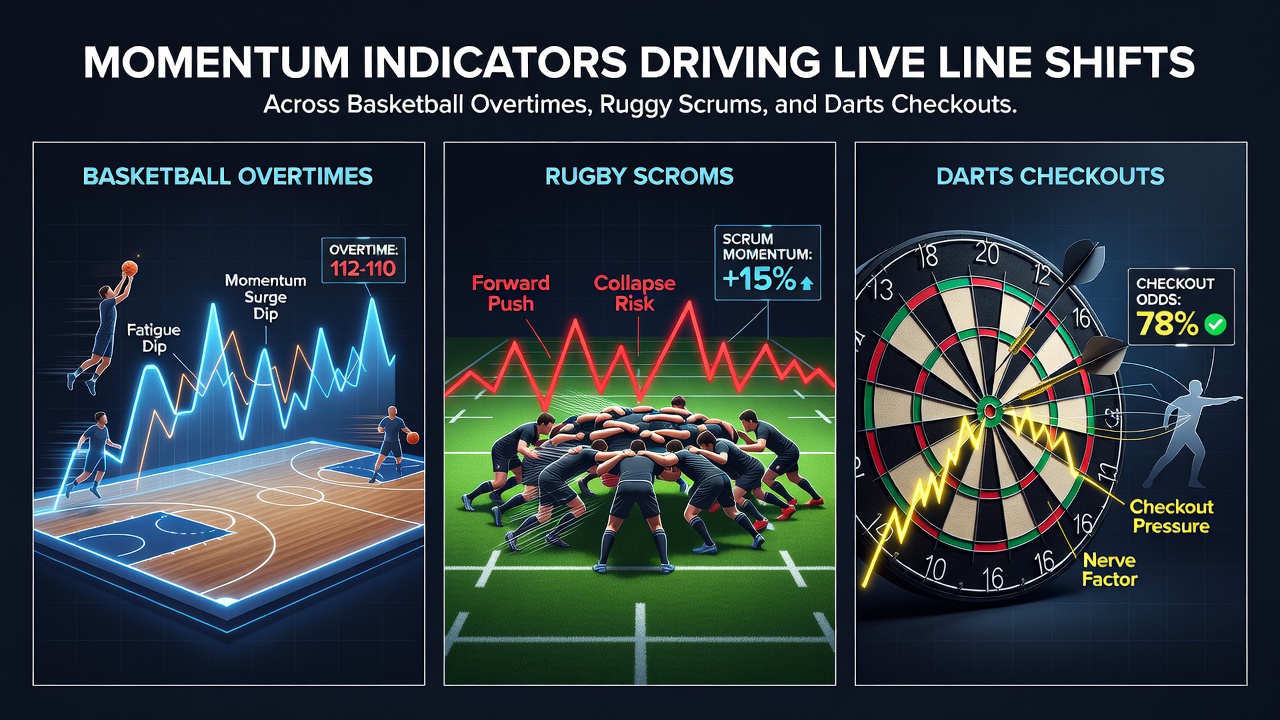
Momentum Shifts Reshaping Real-Time Wagers in Overtime Basketball, Rugby Pack Battles, and Darts Finishing Sequences
Analysts track momentum through statistical patterns that emerge during extended play periods, and these patterns frequently prompt immediate recalibrations in live betting markets across multiple sports. Data compiled through November 2026 shows consistent correlations between performance surges and line movements in basketball overtime segments, rugby scrum engagements, and darts checkout phases, with bookmakers adjusting probabilities within seconds of observable shifts.
Basketball Overtime Dynamics
Teams that maintain possession efficiency above 55 percent during the first two minutes of overtime see their implied win probabilities rise by an average of 12 to 18 points according to records from major North American leagues. Live lines respond because these intervals reveal whether defensive pressure holds or collapses under fatigue, and platforms update totals and spreads accordingly while the clock continues running. Observers note that rebound differentials in these windows correlate strongly with final margin outcomes, prompting rapid adjustments that reflect the new distribution of scoring likelihood.
Rugby Scrum Engagements
Forward packs that secure clean ball from successive scrums alter forward progress expectations, and markets adjust try lines and handicap values when dominant set-piece sequences appear. Statistics from international competitions indicate that teams winning 70 percent or more of scrum feeds in the final quarter convert those advantages into point differentials at rates exceeding 40 percent, which triggers immediate line movements in live markets. The pressure applied through sustained drives forces opposing units to concede territory, and betting platforms register these changes through updated probabilities that account for territorial gains and penalty accumulation.
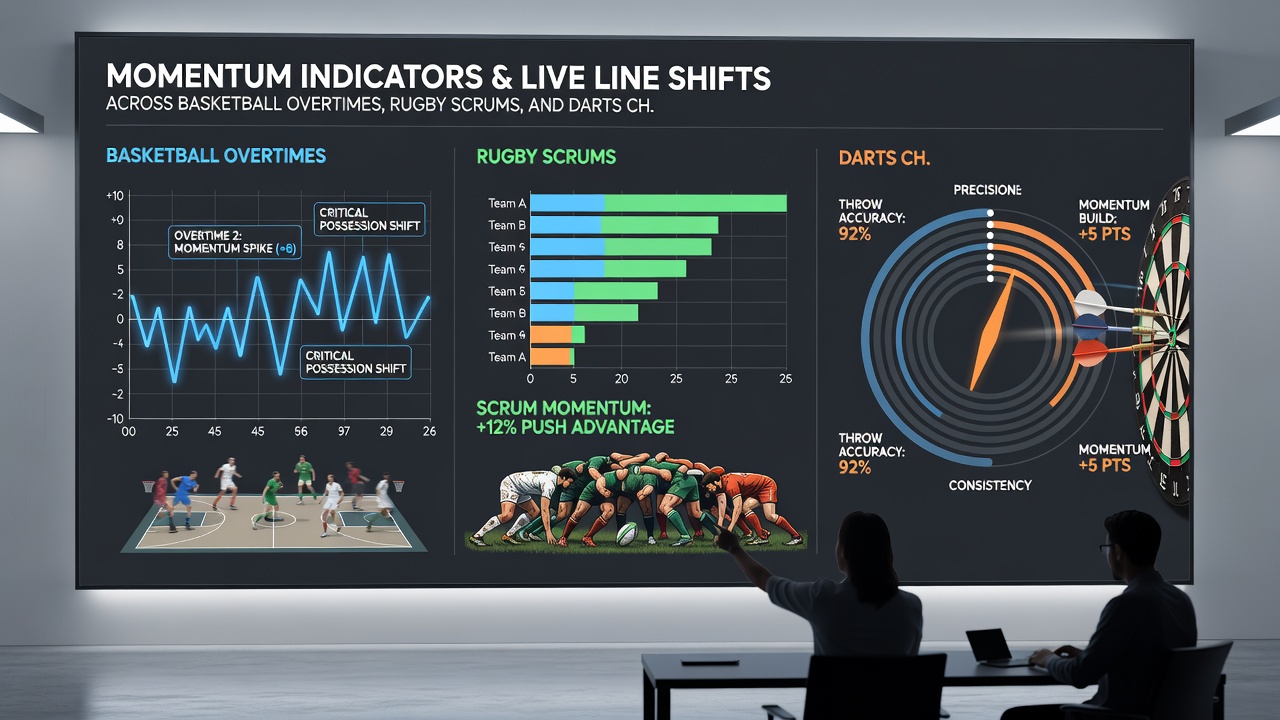
Darts Checkout Sequences
Players who convert checkout opportunities above 65 percent during late legs demonstrate measurable advantages that influence leg handicap and match total lines. Records from professional circuits in 2026 illustrate that sustained finishing streaks coincide with line shifts because opponents must respond with higher checkout percentages to stay competitive, and any drop below established thresholds produces immediate market corrections. The sequencing of treble and double combinations provides measurable signals that platforms incorporate when recalibrating implied probabilities for remaining legs.
Integrated Data Patterns Across Events
Cross-sport comparisons reveal that momentum indicators operate through similar mechanisms despite differing physical demands, with possession retention in basketball, scrum dominance in rugby, and finishing conversion in darts all producing parallel effects on live odds. Reports from teh Sports Science Research Institute document how these metrics cluster during high-stakes intervals, allowing algorithms to detect deviations from baseline performance within narrow time frames. Markets therefore incorporate real-time feeds that combine player tracking, set-piece outcomes, and finishing percentages to maintain alignment between observed events and offered prices.
November 2026 data further indicates that platforms using multi-sport feeds experienced volume increases during simultaneous overtime, scrum, and checkout windows, as bettors responded to visible momentum changes across events. The convergence of these indicators produces tighter spreads when advantages stabilize and wider ranges when sequences remain undecided, reflecting the uncertainty that persists until final outcomes resolve.
Conclusion
Momentum tracking continues to supply the primary mechanism through which live lines adjust across these distinct athletic contexts, with statistical thresholds serving as reliable triggers for market recalibration. Continued refinement of sensor data and algorithm inputs supports more precise responses to performance clusters, maintaining consistency between observed sequences and updated betting parameters through the end of 2026.