Cross-Continent Journeys: Mapping How Travel Schedules Alter Lines Across Rugby Tours, Cricket Series, and Basketball Leagues
Devon Schmitt · Aug 19, 2026

Cross-Continent Journeys: Mapping How Travel Schedules Alter Lines Across Rugby Tours, Cricket Series, and Basketball Leagues
Travel across multiple time zones disrupts athlete recovery cycles and forces bookmakers to recalibrate odds on rugby tours, cricket series, and basketball leagues, because fatigue patterns emerge consistently in performance data. Teams crossing continents encounter circadian misalignment that reduces sprint output and decision-making speed, while markets respond by shifting spreads and totals within hours of schedule announcements. Observers note that these adjustments occur most visibly during the northern hemisphere summer window, when southern hemisphere tours and pre-season basketball exhibitions coincide.
Rugby Tours adn Trans-Tasman Fatigue Patterns
Rugby tours spanning the Pacific or Atlantic create extended recovery windows that alter forward pack dominance and breakdown efficiency, leading lines on total points and handicap bets to move sharply once travel manifests in training reports. Data collected during the 2025 British and Irish Lions series showed a measurable drop in tackle completion rates after flights exceeding 12 hours, prompting operators to shade under totals in the opening fixtures. Similar patterns surface when New Zealand sides travel to South Africa or Europe, where scrum stability metrics decline in the first 48 hours post-arrival. Bookmakers incorporate these historical benchmarks into pre-tour odds models, widening margins on away victories until acclimatisation data arrives from initial matches.
Cricket Series and Subcontinent to Australia Crossings
Cricket schedules that route squads from the Indian subcontinent to Australia or vice versa introduce variable rest periods between Tests, which directly influences over-under markets on run rates and century counts. Research from the Australian Institute of Sport indicates that spin bowlers experience greater velocity reductions after eastward flights, while batters show extended reaction times in day-night encounters. These physiological shifts prompt line setters to adjust series handicap offerings once flight manifests and training footage confirms reduced intensity sessions. During the 2025-26 Ashes cycle, early adjustments appeared in player performance props tied to batting averages, reflecting the documented impact of back-to-back long-haul legs without sufficient rest days.
Basketball Leagues and NBA-Euroleague Overlap
Basketball leagues that blend domestic schedules with international commitments expose players to repeated short-haul and transatlantic flights, generating measurable effects on three-point percentages and rebounding efficiency that live betting platforms track in real time. The 2026 FIBA window, scheduled for late August, overlaps with European club preparations and forces rotation adjustments that operators monitor through load-management disclosures. When teams cross from North America to Europe for exhibition games, defensive rating drops appear in the first two outings, shifting moneyline odds and quarter totals accordingly. Data aggregated across multiple seasons shows that back-to-back games following a six-hour time-zone change produce higher foul rates, prompting markets to price over props on free-throw attempts with greater frequency.
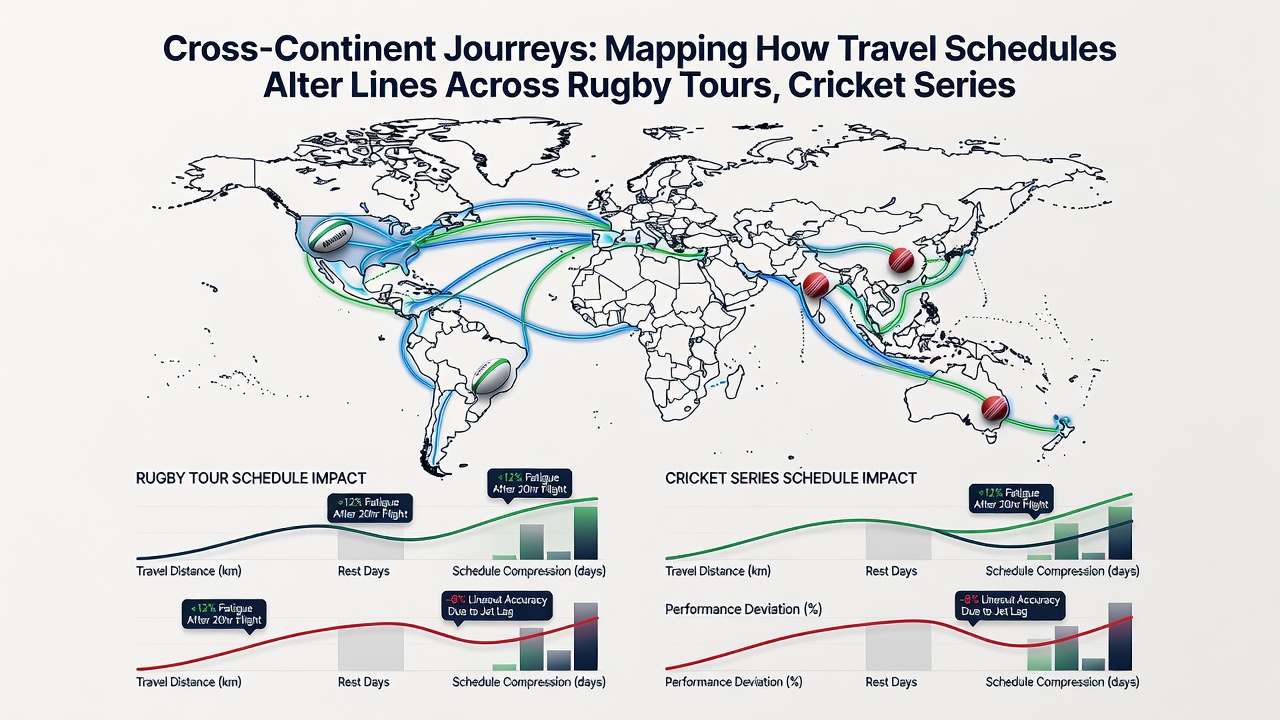
August 2026 fixtures illustrate the pattern clearly: several NBA squads scheduled exhibition matches in Asia and Europe immediately after summer league play, compressing recovery windows and prompting early line movement on totals. Cricket boards meanwhile confirmed additional rest days for squads travelling from England to Pakistan in the same month, a policy response that stabilised certain series handicap lines once announced. Rugby administrators released similar schedules for southern hemisphere tours, allowing markets to price acclimatisation advantages into opening-weekend odds.
Market Response Mechanisms Across Sports
Operators integrate flight duration, direction of travel, and historical performance deltas into algorithmic models that update lines continuously as schedules firm up. When a rugby squad announces a direct 14-hour flight followed by a 36-hour turnaround, handicap spreads often widen by two to three points within the first trading session. Cricket markets show parallel behaviour around Test totals, with over lines contracting when eastward travel precedes day-night matches. Basketball totals expand when teams face compressed schedules across multiple zones, because empirical data links such itineraries to elevated scoring outputs driven by defensive lapses. These movements occur without public commentary, driven instead by internal risk-management protocols that reference aggregated athlete monitoring outputs.
Coaches and medical staff publish periodic load reports through league channels, supplying additional inputs that sharpen line accuracy. In rugby, scrum and lineout statistics from post-travel sessions feed directly into pre-match revisions. Cricket boards release bowling workload figures that influence individual player props, while basketball organisations disclose minutes-restriction lists that move team totals. The cumulative effect keeps lines fluid from announcement through the first quarter of competition.
Conclusion
Cross-continent travel imposes predictable physiological constraints that propagate through performance metrics and prompt systematic recalibration of betting lines in rugby, cricket, and basketball. Schedule announcements, rest allocations, and early training outputs supply the data streams operators use to refine spreads, totals, and props well before events begin. As August 2026 approaches, overlapping tours and league windows will again test these mechanisms, with markets reflecting documented travel effects through adjusted odds structures.